
Making Rowan Even Easier To Use
easier sign-on; layered security with IP whitelists; clearer costs; solvent-aware conformer searching; interviews with onepot and bioArena



This week, we’re rolling out several updates across Rowan: improvements to our OAuth2 authentication flow to reduce login friction, new IP whitelisting options for organizations, better visibility into compute and storage usage, and support for CREST conformer searches in solvent.
Lowering Authentication Friction
We’ve heard from many users asking, “Why do I need to log in so much?” Frequent re-authentication, even if it’s only a small interruption, adds friction and can discourage scientists from using computation.
To improve this experience, we’ve moved to a more robust OAuth2 authentication flow that makes use of a quickly expiring “access” token and a longer-lasting “refresh” token. This allows access tokens to renew automatically, keeping you signed in longer. For multi-tenant deployments, the default session length is now 30 days, so under normal circumstances you’ll only need to log in about once a month.
For Rowan users who sign in with Google, we’ve also added support for Google’s “One Tap” web sign-on, enabling returning users to sign in with a single click (or, in some cases, automatically).
To manage these longer session durations, we’ve added a “Log Out of All Devices” option on Rowan’s account page, which immediately invalidates any active sessions associated with your account.
IP Whitelists for Organization Instances
A common cybersecurity principle is “defense in depth,” which emphasizes using multiple layers of security controls. To support more stringent security requirements, organizations using Rowan can now configure IP whitelists. When an IP whitelist is enabled, access to non-public data is restricted to requests originating from approved IP addresses.
While IP whitelisting is not a complete security solution on its own, it is a widely used layer in enterprise security architectures. This feature is particularly useful for teams running Rowan from fixed corporate networks or private VPCs.
Pricing Transparency & Predictability
Last month, we announced a series of upcoming changes to Rowan’s pricing. Starting in 2026:
Jobs running on GPU hardware will use 3–7 credits per GPU minute.
The cost of Rowan’s subscription tiers and their credit allocations are increasing. (Existing subscribers will be unaffected.)
The cost of ad hoc credit purchases is decreasing from $0.05 per credit to $0.04 per credit.
Each tier will have a storage cap, with additional storage available for $0.25 per GB per month.
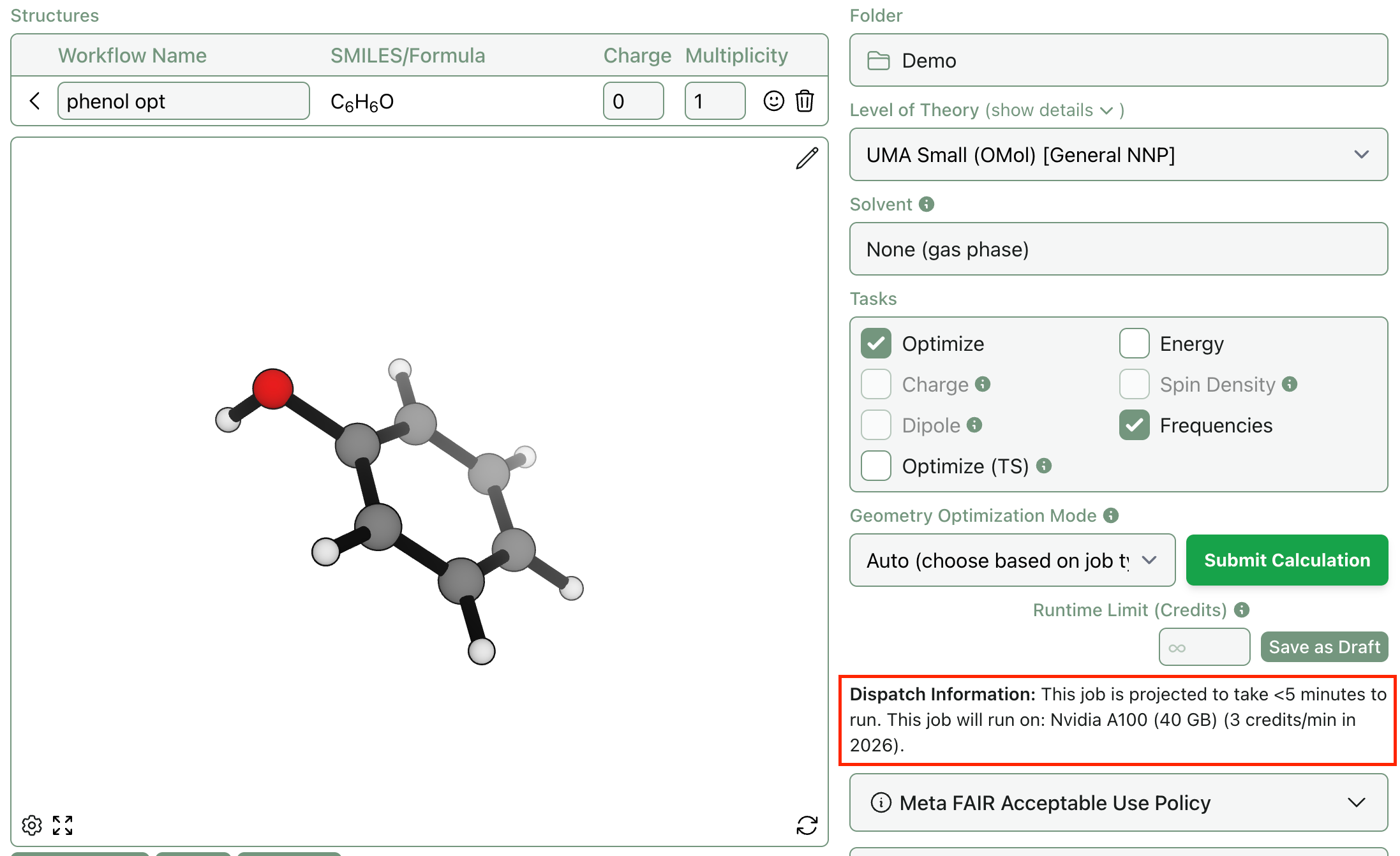
In preparation for these changes, we’ve rolled out better visibility into compute and storage usage. You can now see what hardware jobs will use (and how many credits those jobs will use each minute) before submitting them.
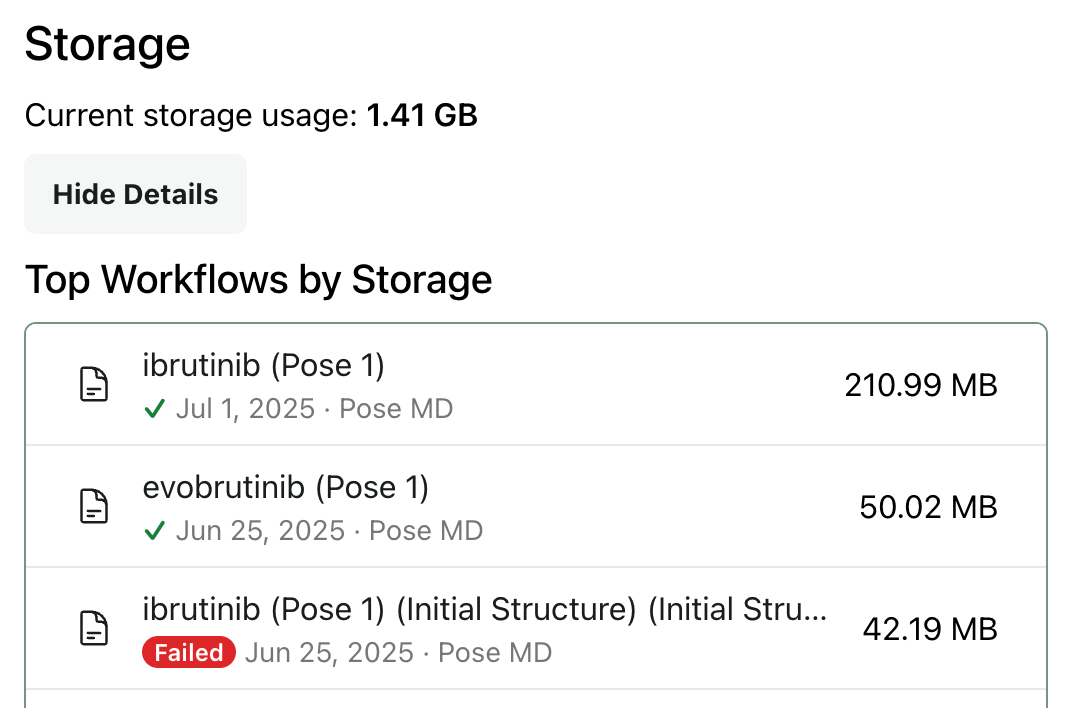
We’ve also added item-level storage insights to Rowan’s billing page, so you can quickly see which workflows and proteins are driving your storage usage.
CREST Conformer Searches in Solvent
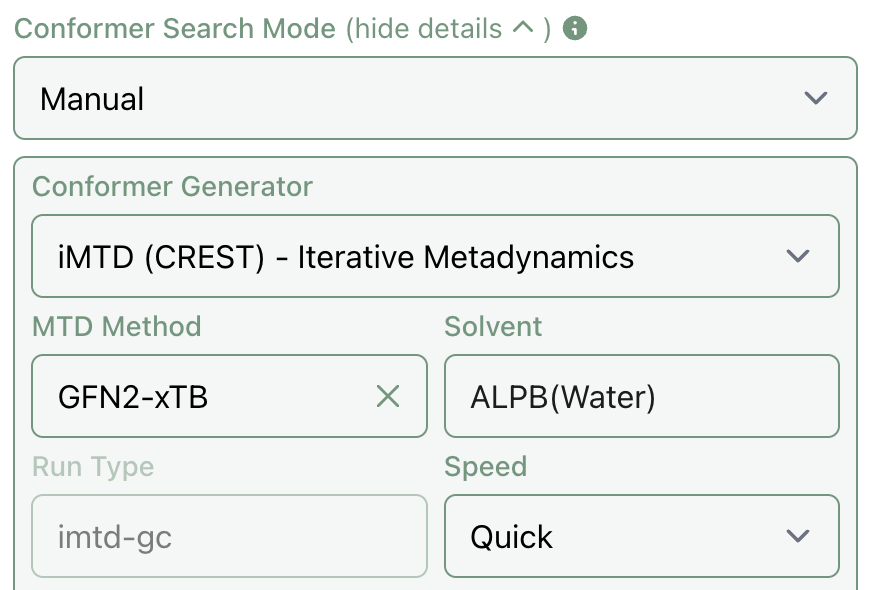
We’ve been putting a lot of attention into our conformer search protocols recently, and one trailing feature we’re happy to announce is the ability to run a CREST conformer search in solvent. This enables more realistic conformer ensembles for molecules where solvation significantly alters relative energies.
This can be specified on the GUI when using the “Manual” conformer search mode.
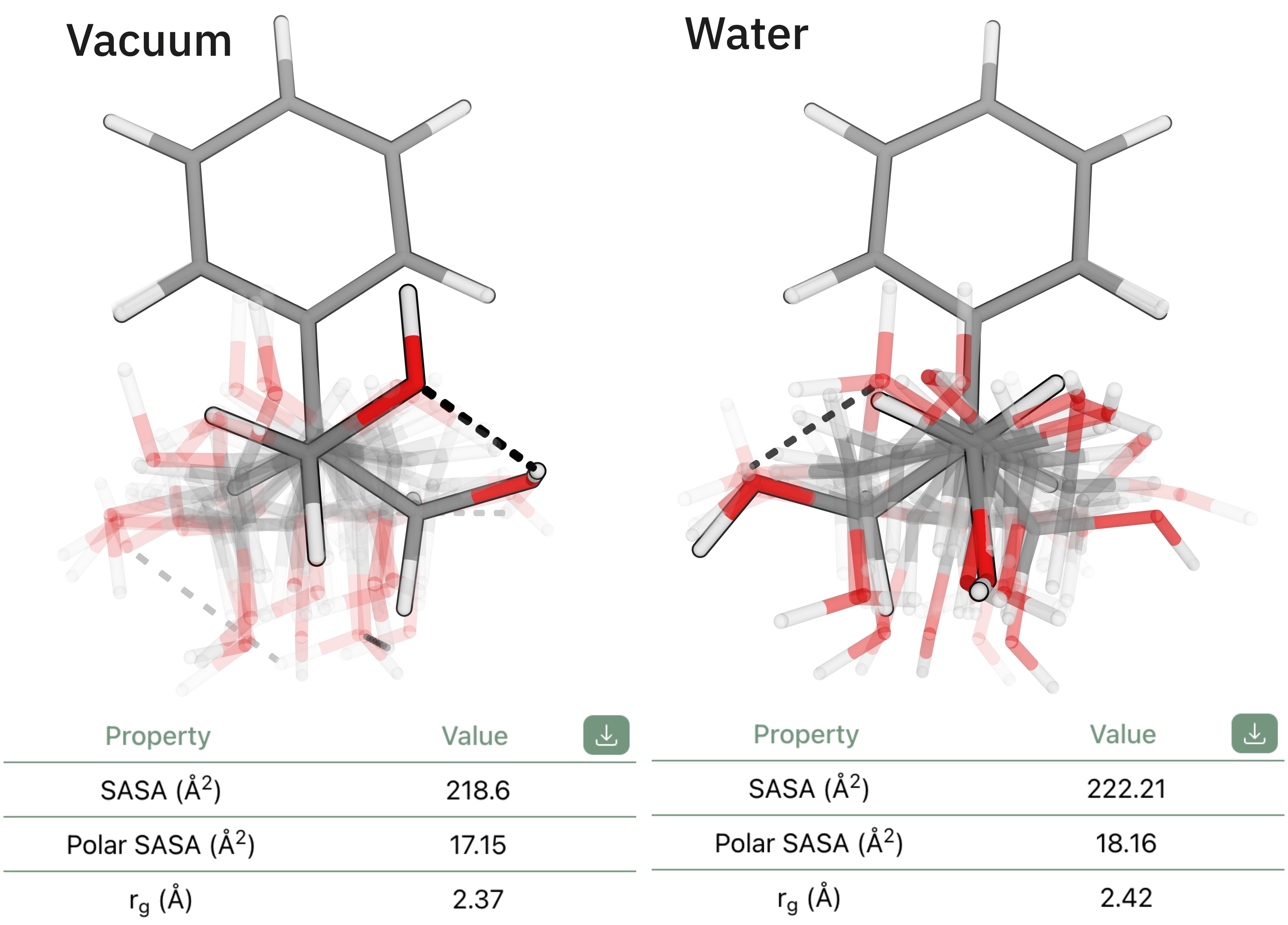
This can be pretty impactful! We ran example conformer searches on 2-phenyl-1,3-propanediol in water and in vacuum. While in vacuum the conformer with intermolecular hydrogen bonding was most stable, there were 8 more stable conformers in water.
Other Writing
Since our last newsletter, we’ve shared a few things on Rowan’s blog:
Corin interviewed Daniil Boiko and Andrei Tyrin from onepot, a startup that just raised just raised $13 million to automate organic synthesis.
Ari talked with Kat Yenko from bioArena, a startup bringing LMArena-style interactive benchmarking to AI for science.
Corin also wrote short blogs looking at eliminating imaginary frequencies when they appear and efficiently submitting batches of workflows through Rowan’s Python API.
Although we’ve got lots more to share very soon, we don’t anticipate sending out another newsletter post until the new year. We’ve had a fun, busy, and productive 2025 here at Rowan, and we’re excited to continue in 2026!