



Heterogeneous catalysis, crystal growth, intercalation, and electron exchange all happen at the surfaces of materials. Different cuts of these materials expose different faces, and those faces alter the kinetics and thermodynamics of many processes. Which faces of the material persist depends on surface energy (γ): only the lowest-γ faces dominate the morphology.
The new subscriber-only surface-energy workflow on Rowan simplifies the process of finding the lowest-energy faces: automatically enumerating possible cuts, optimizing the resulting slabs, and calculating the resulting surface energies and Wulff construction.
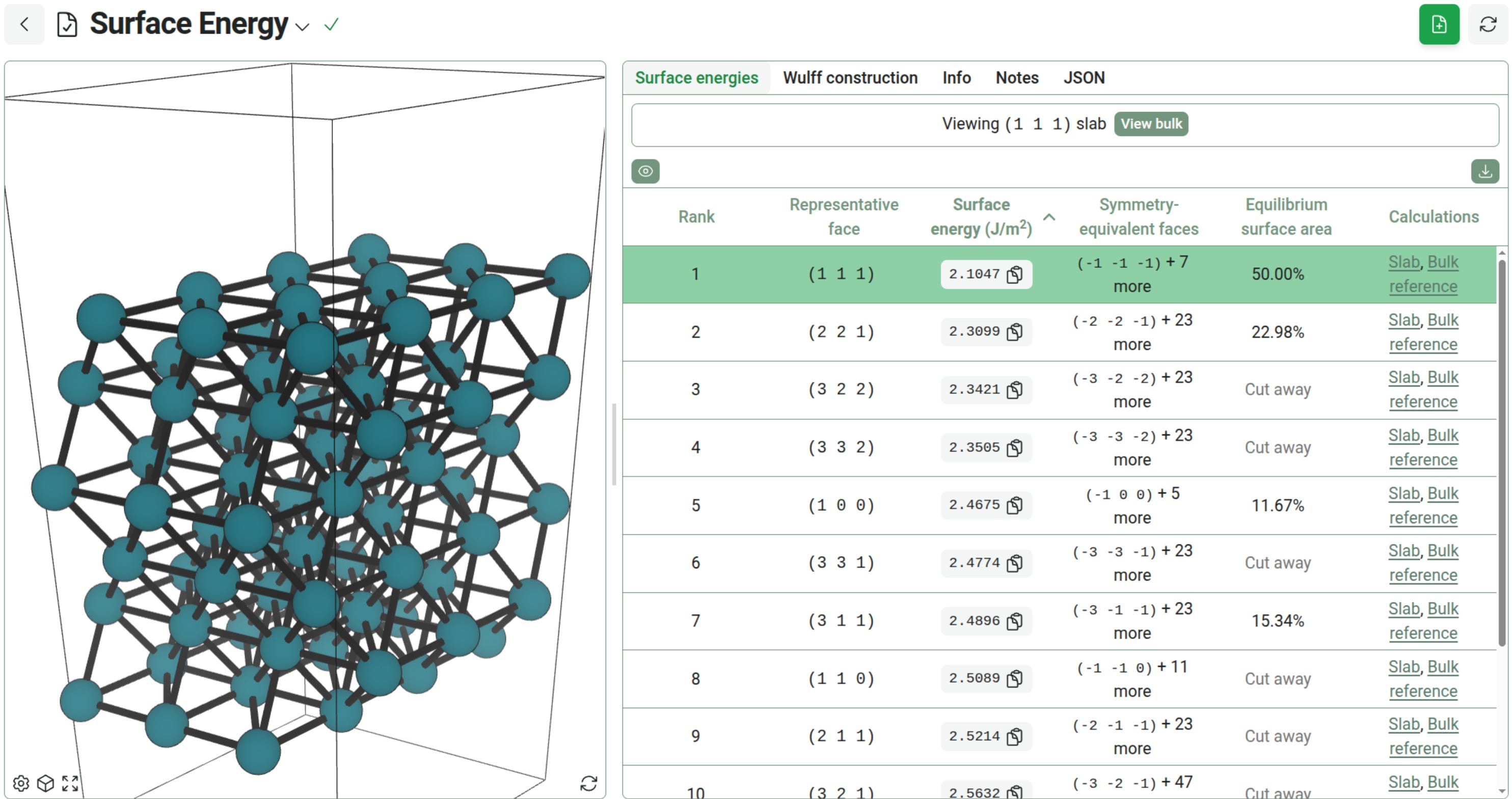
Surface energy in detail
Surface energy (γ) is the energy per unit area required to cleave a crystal along a plane. For close-packed FCC metals like rhodium, palladium, and platinum, the (111) face is most commonly exposed. Other crystals favor different faces, and multiple faces can be exposed at the same time, each with its own chemistry. Minimizing the number of bonds cut per unit area tends to lead to lower γ, but certain cuts can reveal unfavorable terraces and ridges or create polar surfaces whose electrostatic energy diverges. Determining which surfaces are likely to be exposed is thus an important first step in elucidating the downstream chemical activity of a material.
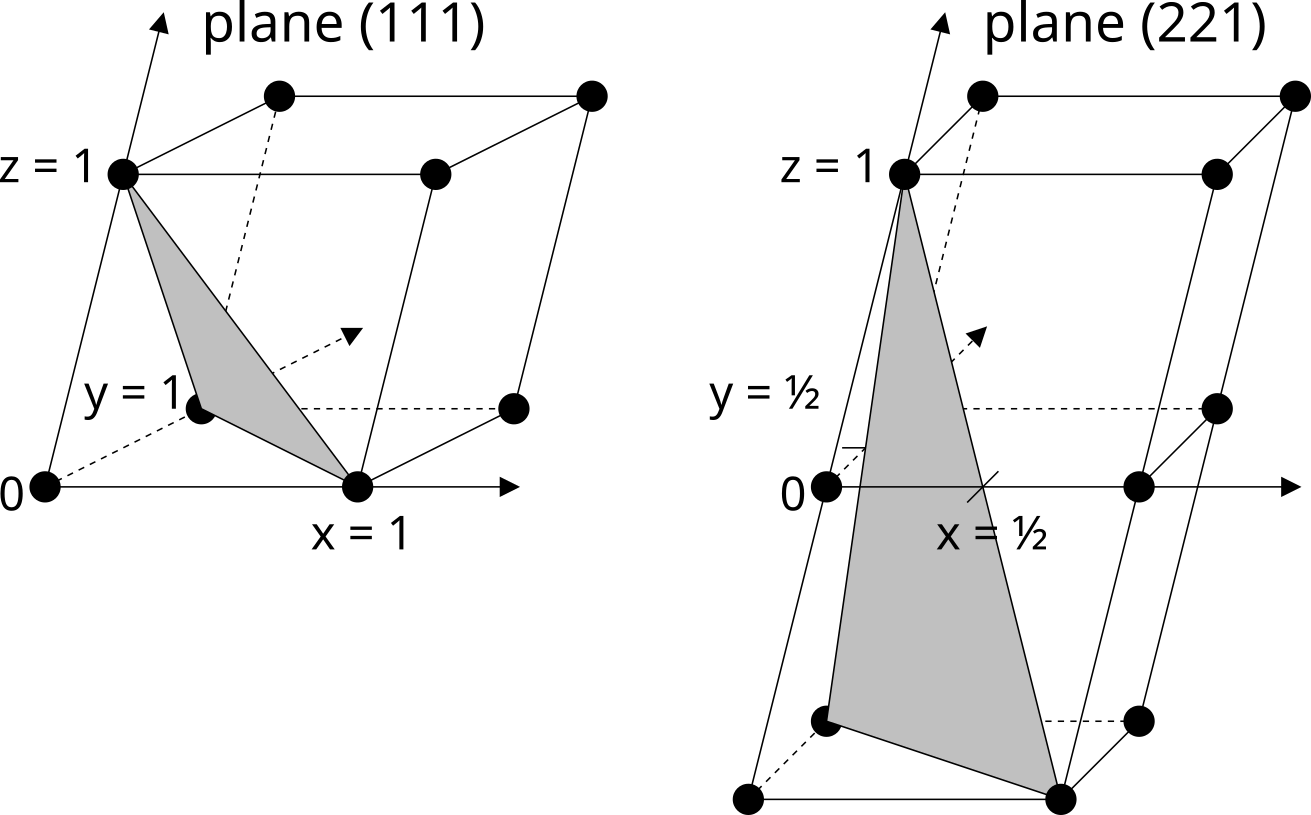

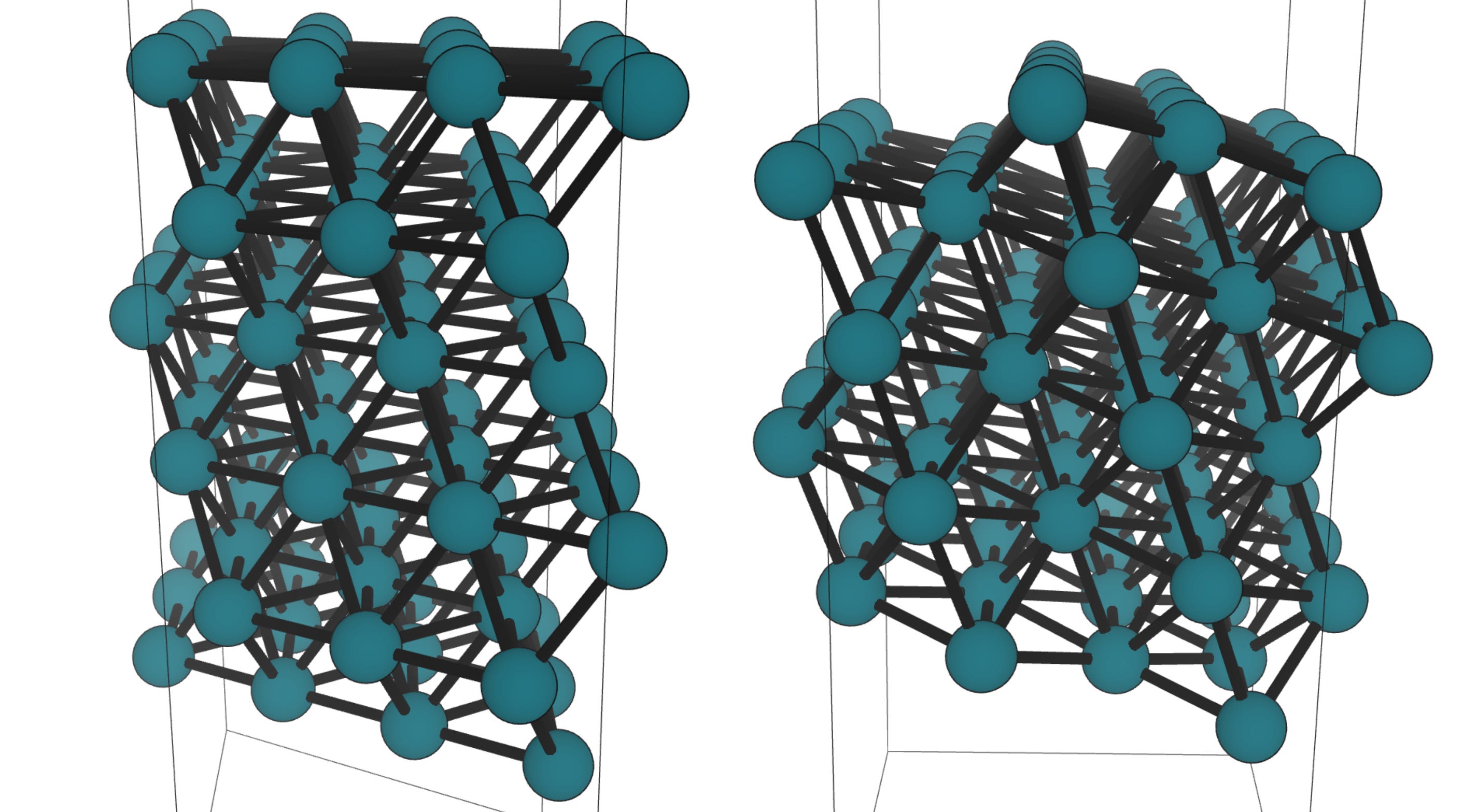
Rowan’s surface-energy workflow automates the process of cutting and optimizing all possible slabs. First, it identifies all potential cuts up to a given Miller index (a notation indicating what face is exposed) and deduplicates symmetry-equivalent cuts (e.g. (111) and (-111)). It then cuts ≈10 Å-thick slabs with ≈10 Å of vacuum on each side; slabs that cannot be constructed with stoichiometric cuts and symmetric surfaces are discarded. The remaining slabs are optimized, with any surface reconstruction indicated by a message appended to the workflow. The relative energies of the slabs are strong indicators of the relative likelihood of formation, and the constructed slabs can themselves be used for further calculations of surface properties.
Wulff constructions
The total surface energy for a particle is a product of the average γ and the total surface area. A sphere minimizes the total surface area, but exposes many high-energy surfaces, while a cube allows the material to be constructed from the lowest-energy symmetry-equivalent faces, but exposes a greater surface area. For crystals where a single surface is significantly lower in energy than others, a single face will dominate the resulting particle. For a species with numerous faces that have low-lying surface energies, the particle will be rounder.
This is formalized in the Wulff construction, which yields the shape that minimizes the combined surface energy of all faces, and is the thermodynamically preferred shape when edge and corner effects are ignored.
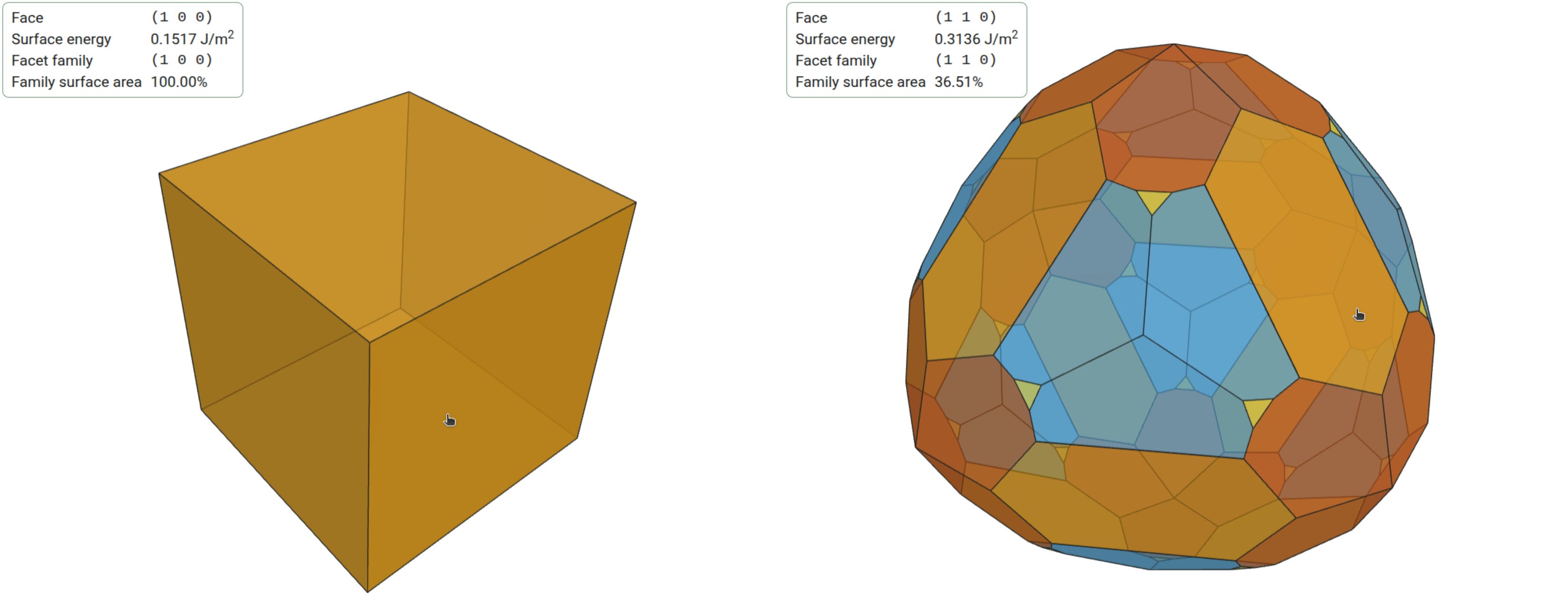
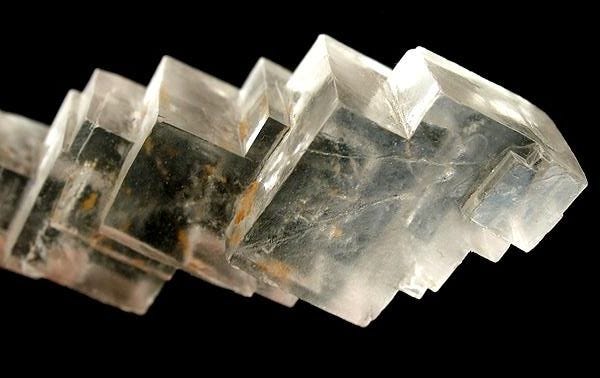
NaCl favors a cubic form since the (100) face and its five symmetry-equivalent faces are significantly lower in energy than other faces. During crystal growth, this leads to the formation of cubic crystals, as deviations from (100) are higher in energy and thus disfavored. The effect is strong enough that this is visible at the macroscopic scale, with halite crystals often forming a series of cubes.

Nanoparticles and heterogeneous catalysis
Nanoparticles often approximate the Wulff construction, and faces differ in activity. In heterogeneous catalysis, some surfaces can be inert, while others are highly active. Thus, the relative proportion of each face is important for predicting the reactivity. In 2020, Hao et al. published an analysis of CO dissociation on Rh nanoparticles, requiring many careful DFT calculations to build the Wulff construction and determine the dissociation pathways. This work can quickly be replicated using the UMA-S-1.2-OMat neural network potential and the surface energy and double-ended TS search workflows.
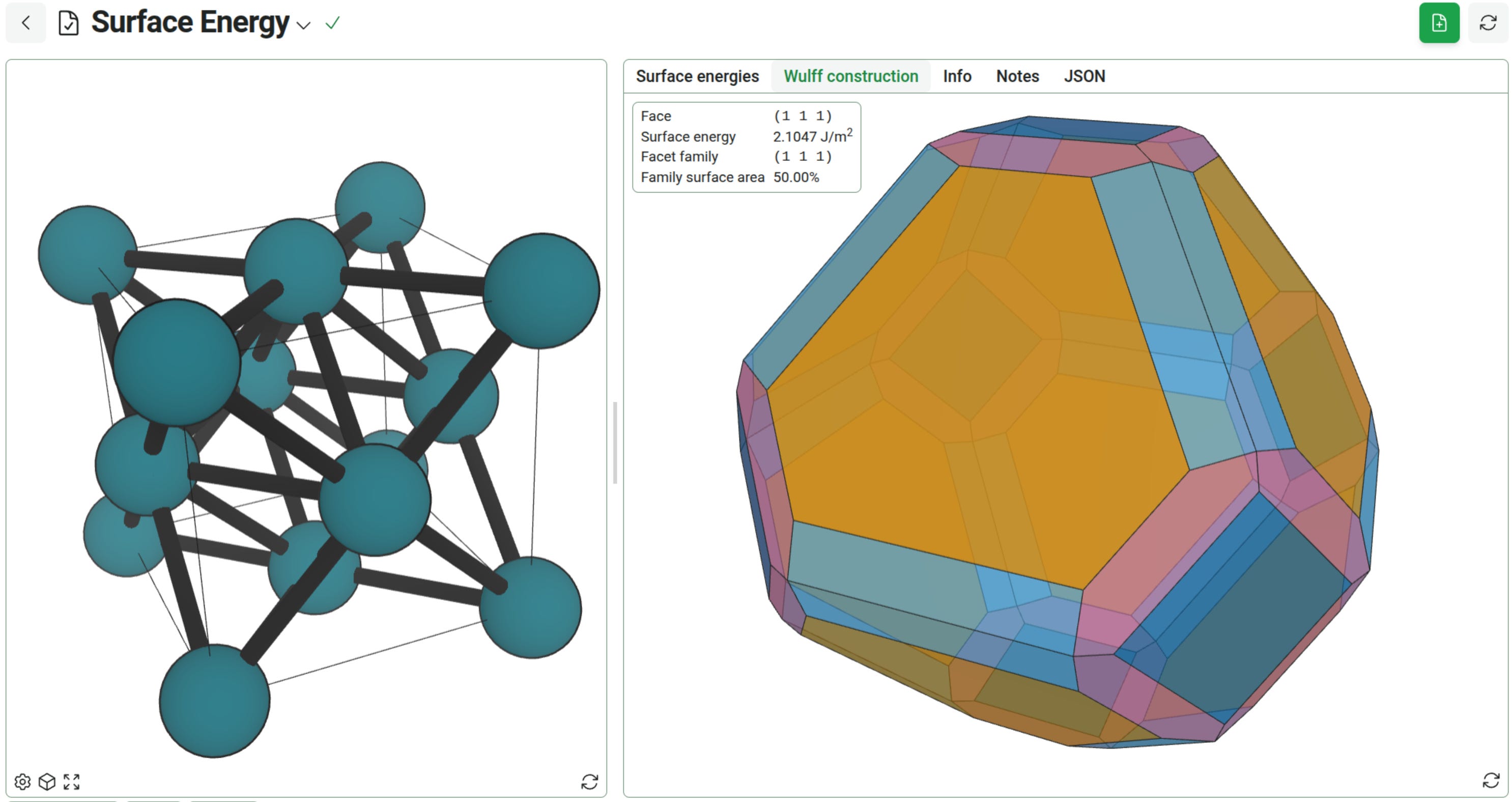
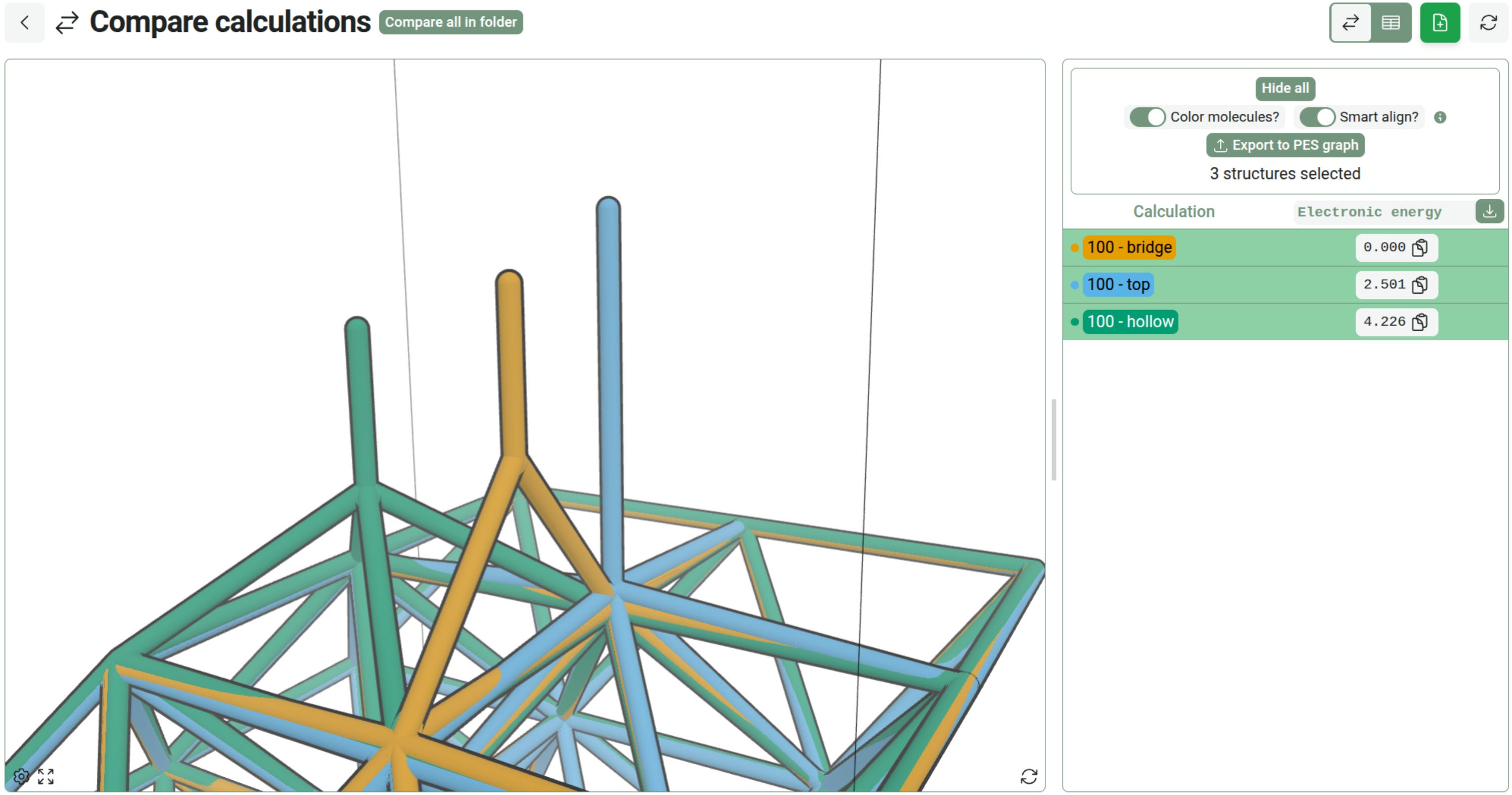
CO preferentially binds to certain faces, and each face presents numerous potential binding positions. The (100) face favors CO binding in the bridging position, while the (111) face favors binding in the top position.
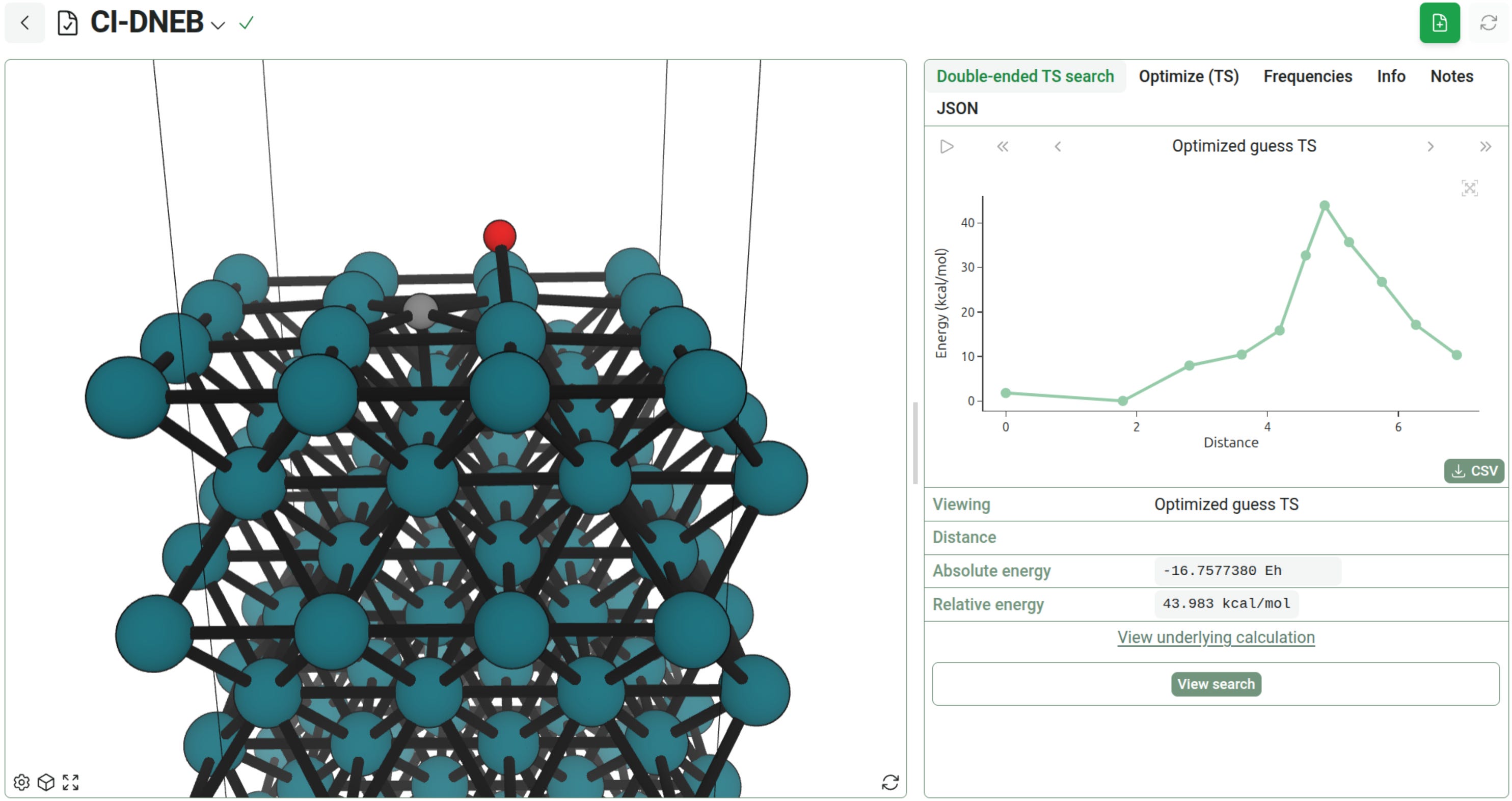
C–O bond dissociation is more favorable on the (100) surface since the hollow site gives the carbon fourfold coordination. This dissociation can be modeled with CI-DNEB using the double-ended TS-search workflow and subsequent TS optimization.
The true rate of dissociation is temperature- and pressure-dependent, and microkinetics is needed to include inter-site interactions in the kinetics and thermodynamics of the dissociation. Real-world catalysts are also not perfect surfaces or nanoparticles, but are instead pockmarked with adatoms, kinks, and islands, all of which can contribute to the overall rate of the reaction.
Subscribers can start using our surface-energy workflow today. We plan to continue adding new tools for materials and heterogeneous catalysis to go with the phonons, UV-Vis, and periodic TS-search workflows we added this summer. If any of this interests you, we’d love to hear from you, please reach out.
I came for none of this and stayed for the halite. The idea that a cube of rock salt is the visible answer to an energy-minimisation problem, and that lead ends up round because it has too many cheap faces to choose between, does something useful to a kitchen shelf. I was always better at stories than equations, so the Wulff construction itself is never going to be mine, but that photograph makes the argument without asking me to.
The part I cannot follow is the pockmarks. You note at the end that real catalysts are covered in adatoms, kinks and islands, which sounds like it could swamp the tidy picture. Is the Wulff shape still a decent first approximation in practice, or is it a starting geometry you then spend the rest of the paper apologising for?